



Article Outline
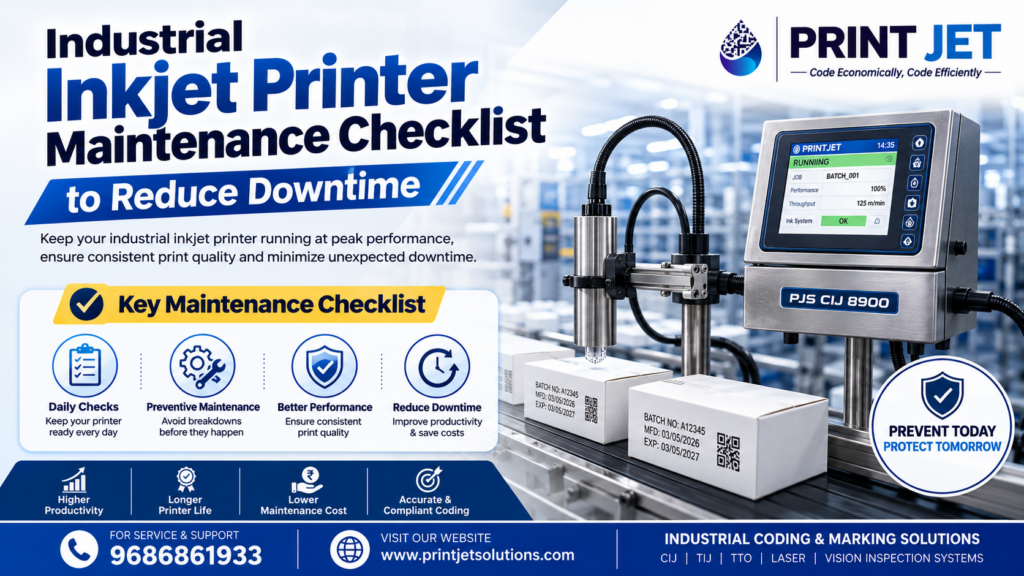
- Industrial Inkjet Printer Maintenance Checklist to Reduce Downtime
- Why Industrial Inkjet Printer Maintenance Matters
- Common Causes of Industrial Inkjet Printer Downtime
- Clogged Printheads
- Ink System Problems
- Environmental Factors
- Daily Industrial Inkjet Printer Maintenance Checklist
- Weekly Maintenance Checklist
- Monthly Maintenance Checklist
- Quarterly Preventive Maintenance
- Essential Components to Inspect Regularly
- Printhead
- Ink Filters
- Pumps and Tubing
- Sensors
- Best Practices for Industrial Inkjet Printer Maintenance
- Common Maintenance Mistakes to Avoid
- Benefits of Preventive Maintenance
- Choosing the Right Maintenance Partner
- Final Thoughts
- Frequently Asked Questions
Why Industrial Inkjet Printer Maintenance Matters
An industrial inkjet printer is one of the most important pieces of equipment in modern manufacturing. Whether you’re printing batch numbers, manufacturing dates, expiry dates, QR codes, barcodes, logos, or variable data, consistent printer performance is essential for maintaining production efficiency and product traceability. A minor issue such as a clogged printhead or contaminated ink can quickly lead to poor print quality, unexpected downtime, and costly production delays.
Regular industrial printer maintenance helps businesses maximize equipment lifespan while minimizing repair costs. Instead of waiting for a breakdown, preventive maintenance ensures that the printer operates at peak performance throughout its lifecycle. Manufacturers in industries such as food, pharmaceuticals, cosmetics, beverages, electronics, automotive, and FMCG rely heavily on dependable coding and marking systems to meet regulatory requirements and customer expectations.
A structured maintenance routine also reduces ink wastage, improves code readability, and prevents rejected products caused by poor-quality printing. By implementing a simple daily, weekly, and monthly maintenance schedule, companies can significantly improve production uptime and maintain consistent coding quality.
Common Causes of Industrial Inkjet Printer Downtime
Even the most advanced Continuous Inkjet (CIJ) printers and Thermal Inkjet (TIJ) printers require regular care. Understanding the common causes of downtime helps maintenance teams prevent failures before they happen.
Clogged Printheads
Dried ink is one of the leading causes of printer failure. When printheads are not cleaned regularly, ink residue blocks the nozzles, causing faded, broken, or unreadable codes.
Ink System Problems
Using low-quality inks, expired consumables, or contaminated fluids can affect ink flow and damage internal components. Ink filters may become blocked, reducing print consistency.
Environmental Factors
Dust, excessive humidity, high temperatures, and vibration can negatively impact printer performance. Maintaining a clean production environment significantly reduces maintenance issues.
Daily Industrial Inkjet Printer Maintenance Checklist
Daily maintenance requires only a few minutes but can prevent hours of unexpected downtime.
| Maintenance Task | Purpose |
| Clean printhead | Prevent nozzle blockage |
| Check ink level | Ensure uninterrupted production |
| Inspect solvent level | Maintain proper ink viscosity |
| Verify print quality | Detect issues early |
| Clean printer exterior | Prevent dust accumulation |
| Check warning messages | Resolve small issues before they become major problems |
| Inspect cables | Avoid communication failures |
Operators should also perform a quick test print before starting production. Checking character clarity, barcode readability, and print alignment ensures the printer is functioning correctly.
Weekly Maintenance Checklist
Weekly inspections provide a deeper assessment of printer health.
Tasks include:
- Clean sensors
- Inspect ink filters
- Check tubing connections
- Remove dust from cooling vents
- Inspect electrical connections
- Verify software settings
- Backup printer configurations
- Clean encoder wheels if installed
These preventive measures improve overall reliability while reducing emergency service calls.
Monthly Maintenance Checklist
Monthly maintenance focuses on internal components that experience gradual wear.
Recommended tasks include:
- Replace worn filters if necessary.
- Inspect ink pumps for leaks.
- Check pressure levels.
- Verify firmware updates.
- Calibrate print position.
- Inspect grounding connections.
- Clean ventilation fans.
- Review maintenance logs.
Monthly inspections also provide an opportunity to identify recurring issues before they become expensive repairs.
Quarterly Preventive Maintenance
Quarterly maintenance should be carried out by trained technicians or authorized service providers.
Typical activities include:
- Complete internal cleaning
- Replace consumable components
- Inspect electrical boards
- Test printhead alignment
- Verify encoder accuracy
- Check software diagnostics
- Replace worn tubing
- Inspect cooling systems
Professional servicing helps extend printer life while maintaining optimal printing performance.
Essential Components to Inspect Regularly
Printhead
The printhead is the heart of any industrial inkjet printer. Regular cleaning prevents clogging, maintains sharp print quality, and ensures consistent ink droplet formation.
Ink Filters
Ink filters remove contaminants before they reach the printhead. Dirty filters restrict ink flow and should be inspected according to manufacturer recommendations.
Pumps and Tubing
Leaks, cracks, or air bubbles in the ink delivery system can reduce print quality and increase downtime. Routine inspection ensures smooth ink circulation.
Sensors
Dirty sensors may trigger false alarms or interrupt production. Keeping sensors clean ensures accurate printer operation.
Best Practices for Industrial Inkjet Printer Maintenance
Following industry best practices significantly improves equipment reliability.
- Always use genuine inks and solvents.
- Train operators properly.
- Follow manufacturer maintenance schedules.
- Maintain a clean production environment.
- Keep spare consumables readily available.
- Record maintenance activities.
- Schedule preventive servicing.
- Update printer software regularly.
- Monitor printer performance trends.
- Replace worn components before failure.
Companies that adopt preventive maintenance typically experience fewer production interruptions and lower operating costs.
Common Maintenance Mistakes to Avoid
Many printer failures result from simple maintenance mistakes.
Avoid:
- Ignoring warning alarms
- Using incompatible inks
- Skipping scheduled maintenance
- Cleaning with improper chemicals
- Delaying filter replacement
- Operating with low solvent levels
- Ignoring print quality issues
- Allowing excessive dust buildup
- Performing unauthorized repairs
Correct maintenance practices reduce costly downtime while protecting your equipment investment.
Benefits of Preventive Maintenance
Preventive maintenance delivers measurable operational advantages.
| Benefit | Business Impact |
| Reduced downtime | Higher production efficiency |
| Better print quality | Improved product traceability |
| Longer printer lifespan | Lower replacement costs |
| Lower maintenance expenses | Increased profitability |
| Consistent coding | Regulatory compliance |
| Less ink waste | Reduced operating costs |
| Improved productivity | Higher customer satisfaction |
Organizations that prioritize preventive maintenance often experience improved equipment availability and reduced total cost of ownership.
Choosing the Right Maintenance Partner
Selecting an experienced service provider is just as important as choosing the right printer.
Look for a company that offers:
- Certified service engineers
- Preventive maintenance contracts
- Genuine spare parts
- Fast technical support
- Remote troubleshooting
- On-site emergency service
- Operator training
- Annual Maintenance Contracts (AMC)
A reliable maintenance partner helps maximize printer uptime and ensures long-term operational efficiency.
Final Thoughts
An effective Industrial Inkjet Printer Maintenance Checklist is essential for keeping production lines running efficiently. Routine inspections, preventive maintenance, and proper operator training significantly reduce downtime while improving print quality and equipment reliability. Investing a few minutes each day in maintenance can save hours of unexpected production delays and expensive repairs.
Whether your facility uses Continuous Inkjet (CIJ), Thermal Inkjet (TIJ), or other industrial coding and marking systems, following a structured maintenance schedule helps maximize printer performance, reduce operating costs, and ensure regulatory compliance. Preventive maintenance is not just about avoiding breakdowns—it is a strategic investment in productivity, product quality, and long-term business success.
Frequently Asked Questions
1. How often should an industrial inkjet printer be serviced?
Basic maintenance should be performed daily, with more detailed inspections weekly and monthly. Professional preventive servicing is typically recommended every three to six months, depending on usage.
2. What is the most common cause of industrial inkjet printer downtime?
Clogged printheads caused by dried ink, contaminated consumables, and inadequate preventive maintenance are among the most common causes.
3. Can preventive maintenance improve print quality?
Yes. Regular cleaning, calibration, and component inspections help maintain sharp, accurate, and readable codes while reducing print defects.
4. Should genuine inks and consumables always be used?
Yes. Genuine inks and manufacturer-approved consumables help protect the printer, ensure consistent performance, and reduce the risk of equipment damage.
5. Which industries benefit most from industrial inkjet printer maintenance?
Industries such as food & beverage, pharmaceuticals, cosmetics, FMCG, automotive, electronics, packaging, and chemical manufacturing benefit significantly from regular printer maintenance because they rely on accurate product coding and traceability.